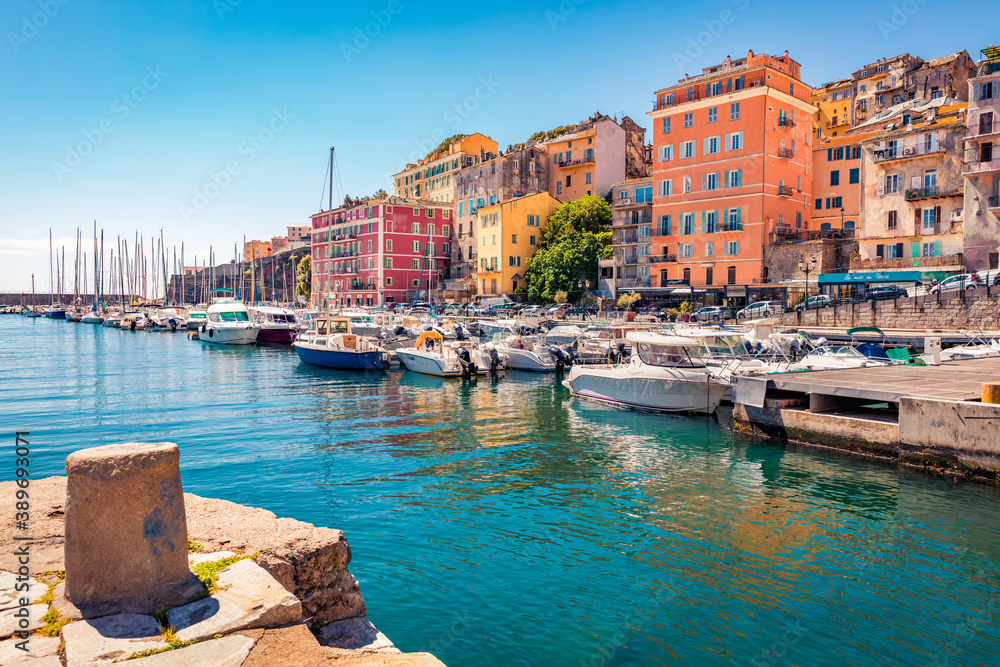
Corte sits right in the mountains of Corsica and breathes history. It was briefly the capital of an independent Corsica and today is a lively university town, surrounded by valleys, rivers and hiking trails.
Corte: heart of the island
Between 1755 and 1769, Corte served as the capital of Corsica under the leadership of Pasquale Paoli. You'll come across that name everywhere on the island. The town played a key role in the struggle for independence and that past is still palpable in the compact centre.
What immediately catches your eye on arrival is the citadel, built high above the town on a rocky outcrop. Inside you'll find the Musee de la Corse and the tourist office, among other things. The viewing platform nearby offers views over the Tavignano valley and the surrounding mountains -- a good moment to realise just how central Corte's position really is.
Around Place Gaffori lies the historic heart, with the statue of General Jean-Pierre Gaffori. In the 15th-century Eglise de l'Annonciation, the pulpit is particularly noteworthy. The bell tower is visible from afar as you approach the town.
Corte is also a university town; a considerable share of its population are students. Outside high season, this creates a pleasant liveliness without mass tourism.
Corte's real strength lies in its surroundings. To the south lies the Restonica valley with its crystal-clear mountain water and natural swimming spots. To the west you find the Tavignano gorge, ideal for those who want to hike.
Insider tip Head to the Restonica valley early; parking is limited and it's at its quietest in the morning.
Corte is not a coastal resort with a beach, but a mountain town with character. Anyone wanting to understand the interior of Corsica starts here.