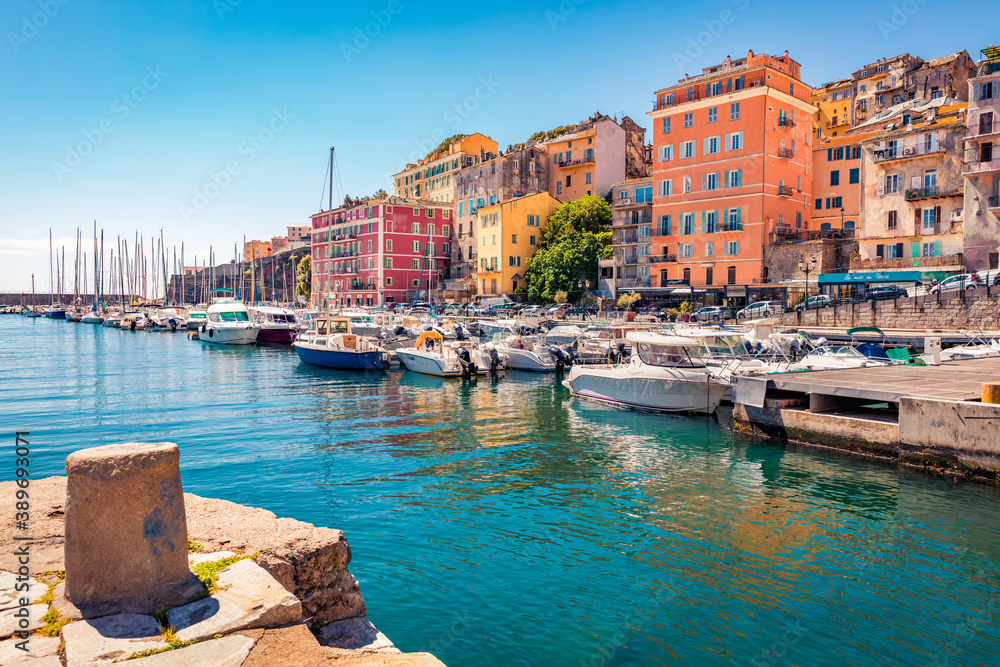
The east coast of Corsica is the side that most travel guides skip past quickly. No dramatic cliffs, no picturesque hill villages, no hairpin bends. Instead: long sandy beaches, shallow lagoons teeming with birdlife, vineyards stretching to the horizon and accommodation that's considerably more affordable than on the west coast. That's precisely why it's worth a look.
East coast: the quiet alternative
Corsica has two faces. The west is vertical, rugged and spectacular. The east is flat, broad and laid-back. The Plaine Orientale -- the eastern coastal plain -- is the only real flat stretch on the island, a strip of lowland running from Bastia in the north to Solenzara in the south. It's also the part of Corsica that least resembles a postcard, and perhaps for that reason the most underrated.
The fact that the east coast is flat doesn't mean it's dull. The coastline consists of kilometres-long sandy beaches that remain relatively quiet even in high season. Behind the beaches lie etangs -- brackish-water lagoons that form an important stopover for migratory birds. At the Etang de Biguglia, just south of Bastia, you can spot flamingos, and in the lagoons around Aleria oysters and mussels are farmed.
The history here is older than elsewhere on Corsica. Aleria was already a thriving city when the Greeks founded a colony there in the sixth century BC. Later the Romans took over and made it the capital of the province of Corsica. The ruins and the archaeological museum paint a picture of the island before the island became Corsican.
Insider tip The east coast is an excellent base for day trips into the mountains. Corte, the Gorges de la Restonica and the Tavignano valley are all within an hour's drive from the coastal plain.
Wine and agriculture
The Plaine Orientale is Corsica's main agricultural area and by far the island's largest wine region. After World War II, many pieds-noirs -- French settlers from Algeria -- settled here and began large-scale wine production. Quality was patchy at first, but in recent decades more and more estates have been producing seriously good wines. Grape varieties such as nielluccio and vermentino thrive in this climate.
Along the N198 -- the main road running the length of the east coast -- you see wine estate after wine estate. Many offer tastings, and the prices are a fraction of what you'd pay in the Balagne or around Patrimonio. It's a relaxed way to spend an afternoon: visit two or three estates, pick up a bottle or two, and soak in the quiet landscape along the way.
Beaches and lagoons
The beaches on the east coast are different from those on the west coast. No hidden coves between the rocks, but broad, straight stretches of sand that sometimes extend for kilometres. Plage de Padulone near Aleria, Plage de Pinia and the beaches around Ghisonaccia are all spacious, easily accessible and even in high season less crowded than the beaches around Porto-Vecchio or Calvi.
The water is shallow and calm, making the east coast particularly suitable for families with young children. There's no surf, little current, and you can wade metres into the water before it reaches your waist. Not the most adventurous swimming, but safe and relaxing.
The lagoons behind the coast are a separate ecosystem. The Etang de Diane, north of Aleria, is known for its oyster farm where you can eat fresh oysters on the spot with a glass of white wine. It's one of those places you stumble upon and then stay two hours longer than planned.
Insider tip The east coast is flat and the roads are straight -- ideal for cyclists. The N198 is busy, but there are plenty of side roads and paths along the coast that are much quieter. In the shoulder seasons it makes for a pleasant ride from Bastia to Solenzara.
Practical info
Accommodation on the east coast is noticeably cheaper than in the more popular regions. Campsites are plentiful, ranging from basic to comfortable, and most are within walking distance of the beach. Hotels and holiday apartments are available too, though the selection is more limited than in Ajaccio or Calvi.
The east coast is also logistically convenient. The N198 connects Bastia with Bonifacio and runs the full length of the coast. It's one of the few straight, fast roads on Corsica, so you can actually cover distances here without setting aside three hours for fifty kilometres. Bastia's airport sits at the northern end, and from the coastal plain you can be in the mountains within an hour.
Anyone looking for peace, space and an affordable holiday on Corsica -- and willing to trade the photogenic drama of the west coast for a calmer rhythm -- will find exactly that on the east coast. It's not the Corsica of the brochures, but it's the Corsica where you can stay, eat and swim well and affordably. And sometimes that's precisely what you need.