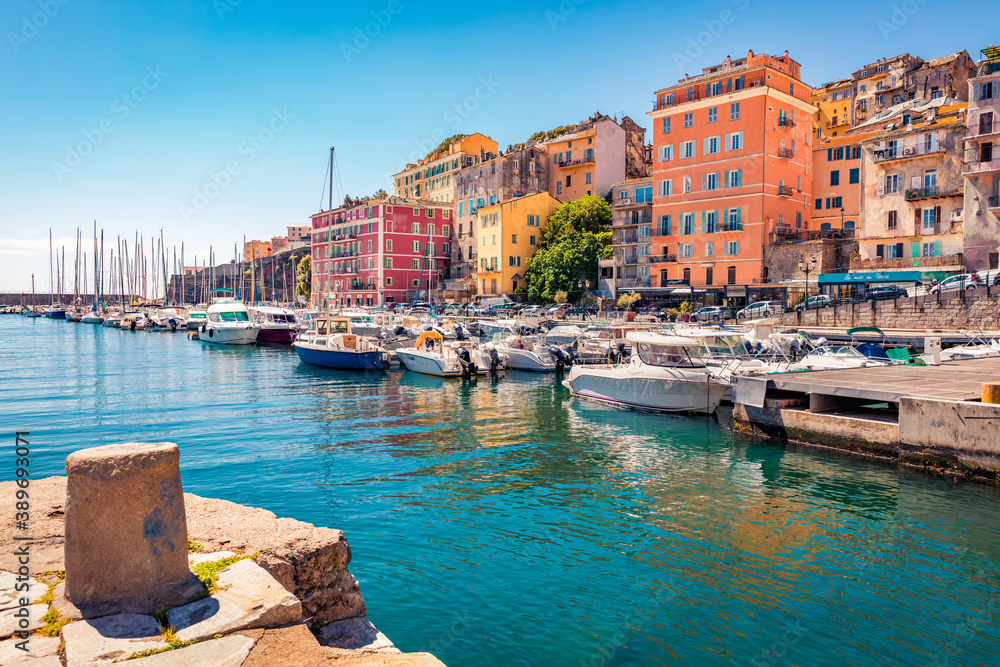
Porto is no more than a handful of houses around a stream and a Genoese tower, but it's the gateway to the most spectacular stretch of coastline on Corsica. From here you explore the Calanques de Piana, the Scandola Nature Reserve and the unreachable village of Girolata -- three places that together form a UNESCO World Heritage Site.
Porto and the Calanques: red rocks and turquoise water
Porto itself is small and easy to get around. The village essentially consists of two parts: the upper village along the main road, with supermarkets and a few restaurants, and the marina below at the river mouth. In between stands the Tour Genoise, a sixteenth-century watchtower you can climb for a few euros. The view over the gulf is worth the effort, especially around sunset when the cliffs turn orange-red.
As a base, Porto is practical but basic. There are hotels, campsites and a handful of gites, but don't expect a wide choice of restaurants or shops. The village lives off the tourism around the Calanques and Scandola, and it shows: during the day the jetty is busy, in the evening it's quiet. If you're after more buzz, you'd be better off staying in Cargese or Ajaccio and visiting Porto as a day trip.
Insider tip Book a boat trip to Scandola and Girolata early in the morning. The sea is usually calmer then, the light is softer, and you're back before the crowds. Reserve a day ahead in high season -- boats fill up fast.
Scandola by boat
The Scandola Nature Reserve is one of the few places in the Mediterranean with dual protected status: UNESCO World Heritage Site and French nature reserve. You can't hike or swim there -- the entire area is strictly protected. But from the water it's overwhelming.
The boat trip from Porto usually takes two to three hours for the short route, or half a day if you also visit Girolata. You sail past cliffs of red porphyry that rise hundreds of metres out of the water, pierced with caves and sea arches. The colours are almost unreal: deep red rock, dark green maquis above, and the water beneath so clear you can see the bottom at ten metres' depth.
During the trip your guide will point out ospreys circling above the rock walls, and if you're lucky you'll spot seals in the inlets. The boats aren't allowed too close to the coast, but even at a distance the scale is impressive.
Girolata is a remarkable stop. This hamlet of a handful of houses and a Genoese fort is reachable only by boat or via a ninety-minute hike along the Tra Mare e Monti trail from the Col de la Croix. There's no road. A couple of restaurants serve fresh fish by the water, and the sense of isolation is complete. It's one of those places where you briefly wonder whether you're still in Europe.
The Calanques de Piana
The Calanques de Piana lie about twenty minutes' drive south of Porto and are a completely different kind of spectacle. Where Scandola is inaccessible and wild, you can drive right through the Calanques -- the D81 winds straight through them.
And what a road it is. The red granite rock formations, shaped by millions of years of erosion, have been sculpted into forms that fire the imagination: towers, mushrooms, animal heads, a heart. The rocks crowd close to the road; at times it feels like driving through a canyon. The effect is strongest in the late afternoon light, when the sun hangs low and the red tones are at their most intense.
There are several car parks along the route where you can stop. From the car park at the Tete du Chien (the dog's head -- you'll spot it immediately) short hiking paths branch out among the rocks. A popular loop of about an hour takes you through a landscape that feels like an alien set. Wear sturdy shoes; the path is rocky and sometimes steep.
Insider tip If you want peace and quiet, go early in the morning or late in the afternoon. Between eleven and three the car parks are overflowing in high season, and driving becomes tricky with oncoming traffic on the narrow road. Outside those hours you'll have the rocks almost to yourself.
Swimming: Plage de Ficajola
Below the Calanques lies one of the prettiest swimming spots on the west coast: Plage de Ficajola. It's a small pebble cove wedged between high red rock walls, with clear water that gradually deepens. You reach the beach via a steep path that takes about twenty minutes to descend. The climb back up is a solid workout, but the swimming in that setting makes up for everything.
There are no facilities at the beach -- no bar, no shower, no sun loungers. Bring water and a towel. The car park at the top is small and fills up fast in summer, so once again: arriving early pays off.
An alternative is the beach at Plage de Bussaglia, north of Porto. It's a wider sandy beach with a few restaurants and more space, but less spectacular in terms of surroundings.
Gorges de Spelunca
If you fancy an inland walk, the Gorges de Spelunca offer a fine route. This gorge lies east of Porto and connects the villages of Ota and Evisa via an old mule track. The hike is roughly two hours one way and leads past Genoese bridges, deeply carved rock pools and dense forest. It's a welcome change of pace after a few days on the coast.
At the Genoese bridge halfway along you can swim in the river -- it's ice-cold but refreshing, and the setting with the old bridge above is gorgeous. Bring swimwear if you plan to do the walk.
Insider tip Start the hike in Evisa and finish in Ota. The path then runs mostly downhill, which is considerably more pleasant. Leave your car in Ota and take a taxi to Evisa, or bring two cars.
Porto and its surroundings deserve at least two full days. One day for the boat trip to Scandola and Girolata, and one day for the Calanques, Ficajola and perhaps the gorge. If you have more time, let the pace drop and simply spend an afternoon by the tower, watching the cliffs change colour as the sun sinks. Because that's actually the best thing you can do here: nothing, and just watch.