Balagne
The garden of Corsica: Calvi, L'Ile-Rousse and the prettiest hill villages
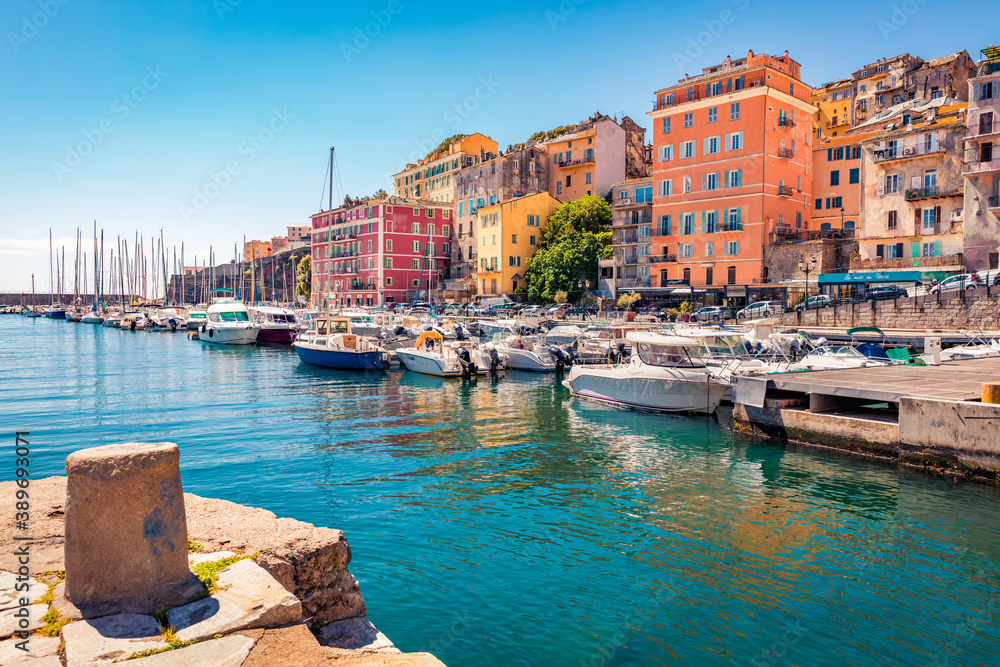
The Balagne is called 'the garden of Corsica' for good reason. It's the sunniest and most fertile part of the island, where olive groves, vineyards and perchoirs -- those quintessential hill villages perched on steep rocky outcrops -- come together to form a landscape you won't soon forget.
Balagne: where mountain meets sea
The Balagne covers roughly the northwestern corner of Corsica, wedged between the mountains of the interior and a coastline that alternates between long sandy beaches and rocky coves. It's a region you can explore in a few days, but where you could easily spend two weeks if you take the time to get beneath the surface.
Two coastal towns set the rhythm: Calvi in the west and L'Ile-Rousse in the east. Calvi draws the most visitors with its imposing citadel and long sandy beach. L'Ile-Rousse is smaller, more laid-back and has a covered market where you can buy fresh cheese and charcuterie in the morning while the village slowly wakes up. Both make excellent bases, each with its own character.
What makes the Balagne special is the hinterland. Drive half an hour inland and you find yourself among the hill villages that give the region its reputation. Sant'Antonino is often called the prettiest village in Corsica -- a title that's getting a bit worn, but if you're there early in the morning before the day trippers arrive, you'll understand why. The village clings like an eagle's nest to a round hilltop, with views stretching all the way to the sea. Wander through the narrow lanes, have an espresso on the little terrace at the top and gaze out over the olive groves below.
Pigna is a different story. This village has reinvented itself as a centre for Corsican crafts and music. You'll find workshops of instrument makers, a music school and a small theatre. It might sound contrived, but it feels surprisingly authentic. The artisans genuinely live and work here; it's not an open-air museum.
Insider tip Combine Sant'Antonino and Pigna in a morning circuit. Drive via the D151 and D51 -- the roads are narrow but perfectly manageable, and along the way you pass olive groves with views you'll want to stop for.
Lumio lies closer to the coast and is popular at sunset. From the church square you look out over the bay of Calvi as the light slowly turns orange. The village itself is compact and quiet, with a handful of restaurants where you eat well in a relaxed setting.
Between Calvi and L'Ile-Rousse runs the Tramway de la Balagne, a narrow-gauge train that trundles along the coast, stopping at little beachside halts. It's no high-speed line -- allow about 45 minutes for the full journey -- but that slow pace is precisely what makes it worthwhile. Hop off at one of the intermediate stops, walk to the beach, and catch a later train back. Plage de Bodri and Plage de l'Arinella are favourites among those who want to avoid the busier town beaches.
The beaches of the Balagne rank among the best in Corsica. Calvi's beach is nearly six kilometres long and consists of fine, light-coloured sand with clear, shallow water -- ideal for families. Heading towards L'Ile-Rousse you find smaller bays that you can sometimes have almost to yourself, certainly outside July and August. The water here is generally a bit warmer than on the east coast, thanks to the sheltered position.
Olive oil, wine and chestnuts
The Balagne has been the agricultural heart of Corsica for centuries. The olive groves are everywhere, some with trees hundreds of years old. Local olive oil is subtle and fruity -- quite different from the Italian or Spanish varieties you may be used to. Pick up a bottle from one of the small producers along the road; you'll spot the signs easily enough.
Wine production has been on the rise in recent years. Domaine Orsini and Clos Culombu are names you'll come across, and many estates offer tastings. The local grape varieties -- Nielluccio and Vermentino -- produce wines that pair beautifully with Corsican cuisine. A bottle of Clos Culombu rose on a warm terrace is one of those moments you think back on later and say: that was just right.
Insider tip The market in L'Ile-Rousse (Place Paoli, every morning) is the best place to taste and buy local produce. Come before ten and you'll have the best selection and can browse in peace.
Practical info
The Balagne is easy to reach. Calvi has an airport with direct flights from mainland France, and ferries from Nice and Marseille dock at both Calvi and L'Ile-Rousse. By car from Bastia, allow about two hours via the N197, a road that gets more and more beautiful after Ponte Leccia as you approach the coast.
Accommodation comes in all price ranges, from simple campsites in the hinterland to boutique hotels in Calvi. In high season (July-August) booking ahead is essential, but in June or September you can usually still find something. Those months are more pleasant anyway: fewer crowds, lower prices and a comfortably warm climate without the extreme heat of midsummer.
The Balagne is best explored by car. Distances are short -- from Calvi to Sant'Antonino is twenty minutes -- but the roads are winding and narrow. Drive slowly, enjoy the views and don't count on high average speeds. You don't need to; the beauty of the Balagne is that everything is close by.